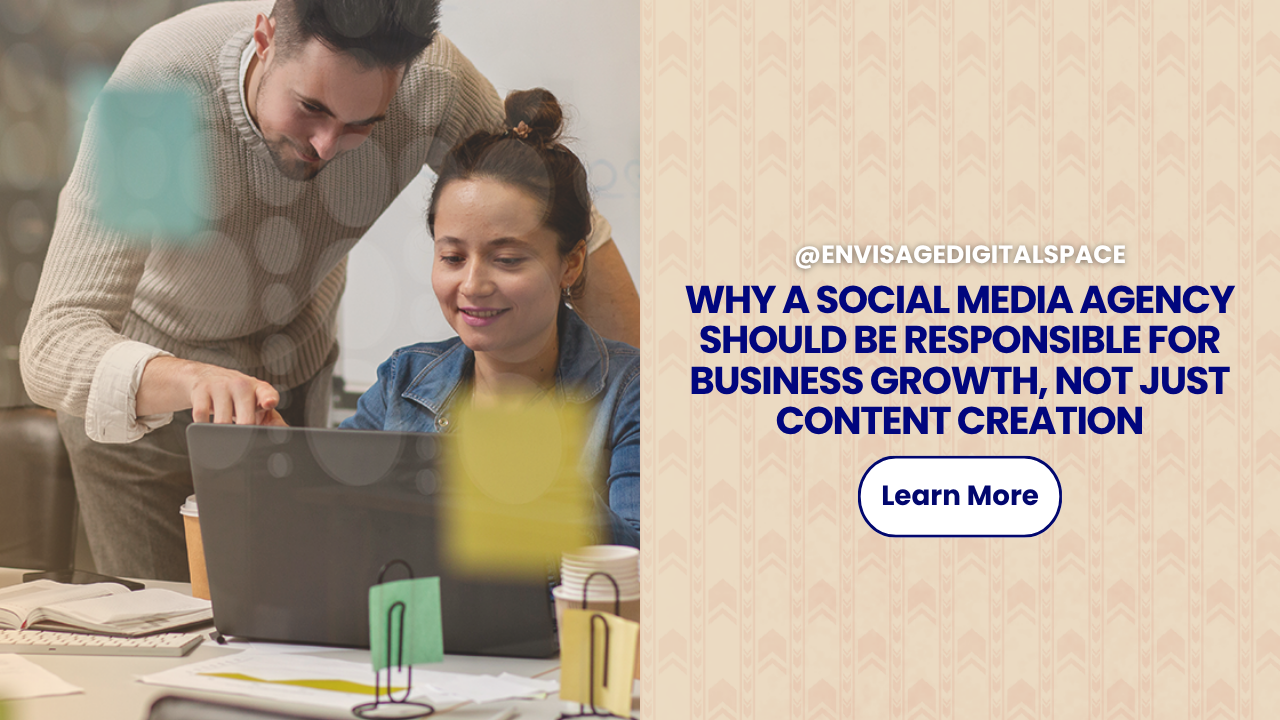
Why a Social Media Agency Should Be Responsible for Business Growth, Not Just Content Creation
Social media has become one of the most important channels for modern businesses looking to build awareness, engage customers, and generate revenue. Platforms such as Instagram, Facebook, TikTok, LinkedIn, and Xiaohongshu allow brands to communicate directly with their audiences at a scale that traditional marketing channels cannot always match.
But as social media becomes increasingly competitive, simply producing attractive content is no longer enough. A well-designed graphic, entertaining Reel, or carefully written caption may generate engagement, but engagement alone does not necessarily translate into leads, sales, or sustainable business growth.
This is why the role of a Social Media Agency needs to go beyond content creation. Modern social media management should be connected to broader commercial objectives, including customer acquisition, brand positioning, lead generation, website traffic, conversions, and customer retention.
The challenge is that many businesses still evaluate social media agencies based primarily on how often they publish content or how attractive their feeds look. While creative quality remains important, the real value of social media lies in what happens beyond the post itself. This guide explores why a Social Media Agency should be responsible for contributing to business growth and how brands can move from content-focused social media to a strategy built around measurable commercial outcomes.
What Does a Social Media Agency Actually Do?
A Social Media Agency is responsible for developing and managing a brand’s presence across social platforms. However, its role should extend far beyond designing posts and publishing them according to a content calendar.
A strategic agency should understand the business behind the social media account. This means identifying the target audience, understanding the customer journey, developing the brand’s positioning, creating relevant content, managing communities, supporting paid campaigns, analysing performance, and continuously improving the strategy.
Content creation is therefore one part of a much larger process.
For example, a social media post promoting a product may generate thousands of views. But the agency should also consider what happens next. Do users visit the website? Do they send enquiries? Do they save the post? Do they share it with potential customers? Does it contribute to conversions or improve brand recall?
A Social Media Agency that considers these questions can play a much more valuable role than one focused purely on publishing content.
Why Content Creation Alone Is Not Enough
Content is the foundation of social media marketing, but content by itself is not a business strategy.
A brand could publish high-quality content every day and still experience disappointing results if the content is reaching the wrong audience, failing to communicate a clear value proposition, or generating engagement that has no connection to business objectives.
This is particularly common when businesses use vanity metrics as their primary measurement framework.
Likes and follower growth can be useful indicators, but they do not necessarily tell a business whether social media is contributing to revenue.
A Social Media Agency should therefore connect content performance to broader marketing objectives.
If the goal is lead generation, the strategy should encourage users to take actions that contribute to the lead funnel. If the goal is e-commerce sales, social media content should support product discovery, consideration, and conversion. If the objective is brand awareness, the agency should measure reach, audience growth, brand searches, mentions, and other relevant indicators.
The question should not simply be, “How well did this post perform?”
It should be, “How did this activity contribute to the business?”
Understanding the Business Before Creating Content
One of the first responsibilities of a strategic Social Media Agency should be understanding the client’s business.
This means looking beyond the social media account and examining the company’s products, services, target customers, competitors, positioning, sales process, and commercial objectives.
Without this context, content can easily become disconnected from the company’s actual needs.
A B2B company, for example, may not need viral entertainment content. Its social strategy may be more effective when it focuses on expertise, case studies, industry insights, educational content, and lead generation.
A beauty brand, on the other hand, may benefit from tutorials, creator content, product demonstrations, customer reviews, and visually engaging short-form videos.
The correct strategy therefore depends on what the business is trying to achieve.
A Social Media Agency should use business objectives as the starting point for content strategy rather than creating content first and attempting to find a purpose for it afterwards.
Building a Social Media Strategy Around the Customer Journey
Customers rarely move directly from seeing one social media post to making a purchase.
The journey may involve discovering the brand through a Reel, visiting the profile, reading customer comments, watching product demonstrations, searching for reviews, visiting the website, and returning through a retargeting advertisement before finally converting.
A Social Media Agency should understand each of these stages and create content that supports them.
Awareness content can introduce the brand to new audiences. Educational content can help potential customers understand a problem or category. Product-focused content can demonstrate value. Testimonials and user-generated content can provide social proof. Retargeting advertisements can reconnect with people who have already demonstrated interest.
This creates a social media funnel rather than a collection of unrelated posts.
The result is a more structured approach where content plays a specific role in moving audiences closer to a business objective.
Using Data to Identify What Drives Growth
A strategic social media operation should be continuously informed by data.
Social platforms provide information about reach, engagement, audience demographics, content performance, clicks, profile activity, and other behaviours. When combined with website analytics and advertising data, these insights can provide a more complete picture of customer behaviour.
A Social Media Agency should use this information to identify patterns.
Perhaps educational content generates more saves and shares. Maybe product demonstrations generate more website visits. Certain creators may generate stronger conversion rates. Particular audiences may respond more strongly to specific messaging.
These insights can then influence future campaigns.
Data should therefore not simply appear in a monthly report. It should influence what the agency creates next.
Turning Engagement Into Meaningful Business Actions
Engagement is valuable, but not all engagement has the same commercial impact.
A funny post may receive thousands of likes without generating any interest in the company’s products. Meanwhile, a highly educational post may receive fewer likes but generate hundreds of saves, shares, website visits, or direct messages.
A Social Media Agency needs to understand this difference.
The objective is not to eliminate entertaining or awareness-focused content. Instead, the agency should build a balanced content ecosystem where different types of content contribute to different stages of the customer journey.
Calls-to-action can also be used strategically. Rather than adding “Buy now” to every post, brands can encourage users to learn more, visit a website, send an enquiry, download a resource, sign up for an event, or explore a product.
This creates more natural pathways from social engagement to business action.
Combining Organic Social Media With Paid Advertising
Organic content and paid social advertising should not operate as completely separate activities.
Organic content can reveal which topics, messages, and creative formats resonate with an audience. High-performing content can then potentially be adapted into paid campaigns.
Paid advertising can also extend the reach of important content beyond existing followers and target specific audience segments.
A Social Media Agency can connect these activities by using organic performance data to inform paid media decisions while using advertising results to improve future organic content.
This creates a feedback loop between creativity and performance.
Rather than simply boosting random posts, businesses can develop paid campaigns around strategic objectives and proven creative concepts.
Community Management as a Growth Strategy
Social media is not simply a broadcasting channel. It is also a place where customers ask questions, express opinions, share experiences, and interact with brands.
Community management therefore plays an important role in business growth.
Responding to comments and messages can help remove purchase barriers, address concerns, provide customer support, and strengthen relationships. A potential customer asking about pricing, availability, product suitability, or service details may already be close to making a purchasing decision.
A Social Media Agency should therefore treat comments and direct messages as valuable customer touchpoints rather than administrative tasks.
Social conversations can also provide useful market intelligence. Repeated questions and complaints may reveal product or communication gaps, while positive feedback can highlight potential marketing angles.
Using Creators and User-Generated Content to Build Trust
Consumers often respond differently to content created by real customers and creators than they do to traditional brand advertising.
Creator partnerships and user-generated content can provide social proof while showing products or services in realistic situations.
However, the objective should not simply be to work with the creator who has the largest audience.
A Social Media Agency should evaluate audience relevance, engagement quality, credibility, content style, and brand fit.
Similarly, user-generated content should be integrated strategically rather than simply reposted whenever it becomes available.
Customer stories, testimonials, product demonstrations, reviews, and real-world experiences can all support different stages of the customer journey.
When managed effectively, these forms of content can make a brand feel more authentic and reduce uncertainty for potential customers.
Measuring Social Media Success Through Business Metrics
If a Social Media Agency is responsible for contributing to business growth, its performance measurement must go beyond likes and followers.
The appropriate metrics depend on the business objective.
For lead-generation campaigns, businesses may focus on enquiries, qualified leads, conversion rates, and cost per lead. For e-commerce brands, purchases, revenue, conversion rate, customer acquisition cost, and return on advertising spend may be more relevant.
Brand-building campaigns may focus on reach, engagement quality, share rates, mentions, audience growth, and brand search behaviour.
The important point is that social media metrics should connect to the larger business strategy.
A monthly report should therefore explain not only what happened but why it happened and what should happen next.
This transforms reporting from a collection of numbers into a decision-making tool.
Continuous Testing and Optimisation
Social media changes constantly.
Algorithms evolve, audience preferences shift, new content formats emerge, and competitors introduce new creative approaches.
A Social Media Agency cannot rely on one strategy indefinitely.
Continuous testing allows agencies to experiment with different hooks, visuals, content formats, audiences, messaging, calls-to-action, posting approaches, and advertising creatives.
The purpose is not to change everything constantly. Instead, controlled experimentation helps identify which variables are contributing to performance.
Over time, these learnings create a stronger marketing system.
The brand becomes increasingly knowledgeable about what its audience responds to, which allows future campaigns to become more efficient.
The Case for Working With a Growth-Focused Social Media Agency
Managing social media as a genuine business-growth channel requires a combination of creative, strategic, analytical, advertising, and community-management expertise.
For many businesses, building all of these capabilities internally can be challenging.
A growth-focused Social Media Agency can provide the resources and specialist knowledge required to connect content with broader commercial objectives.
Instead of simply asking what should be posted this week, the agency can ask which audience needs to be reached, what stage of the customer journey they are in, what message will move them forward, and how success should be measured.
At Envisage Digital Space, we help businesses build social media strategies that go beyond content production. From content strategy and creative development to paid advertising, community management, creator marketing, analytics, and performance optimisation, our approach is designed to connect social media activity with meaningful business outcomes.
Our objective is not simply to make a brand look active online. It is to help turn social media attention into stronger relationships, qualified opportunities, and sustainable growth.
Conclusion
Social media has become too important to be treated as a simple content publishing channel.
While high-quality content remains essential, businesses need more than attractive posts to achieve meaningful results. They need a strategy that connects content, audience behaviour, community engagement, paid advertising, creators, analytics, and conversion opportunities.
This is why a Social Media Agency should be responsible for contributing to business growth rather than simply producing content.
The strongest agencies understand the business behind the social media account. They identify the target audience, build strategies around the customer journey, use data to improve decision-making, connect organic and paid activities, manage communities, and measure performance against meaningful commercial objectives.
When social media is approached this way, content becomes more than something to publish. It becomes a tool for attracting customers, building trust, generating demand, strengthening relationships, and supporting long-term business growth.
If your business is ready to move beyond content creation and turn social media into a genuine growth channel, Envisage Digital Space is ready to help. Contact us today.
Frequently Asked Questions
What should a Social Media Agency be responsible for?
A Social Media Agency should ideally be responsible for more than content creation. Its role can include social media strategy, audience research, content development, community management, paid advertising, creator marketing, analytics, conversion optimisation, and performance reporting aligned with business objectives.
Can social media actually contribute to business growth?
Yes. Social media can contribute to business growth by increasing brand awareness, generating website traffic, creating leads, supporting e-commerce sales, strengthening customer relationships, and encouraging brand advocacy. Results depend on the strategy, audience, industry, content quality, and how social media connects with the wider marketing funnel.
Should a Social Media Agency focus on followers or sales?
Follower growth can be useful, but it should not be the only objective. A growth-focused Social Media Agency should consider the business's broader goals, including engagement quality, website traffic, leads, conversions, sales, customer acquisition costs, and other relevant performance indicators.
How does a Social Media Agency measure business growth?
Measurement depends on the campaign objective. Relevant metrics can include leads, enquiries, sales, website traffic, conversion rates, customer acquisition costs, return on advertising spend, engagement, shares, saves, and audience growth. The agency should connect social media metrics to meaningful business outcomes wherever possible.
How can I choose the right Social Media Agency for my business?
Look for an agency that understands your business objectives rather than one that only promises frequent content production. Review its case studies, strategic process, reporting methods, creative capabilities, advertising expertise, and ability to explain how social media activity contributes to measurable business results.