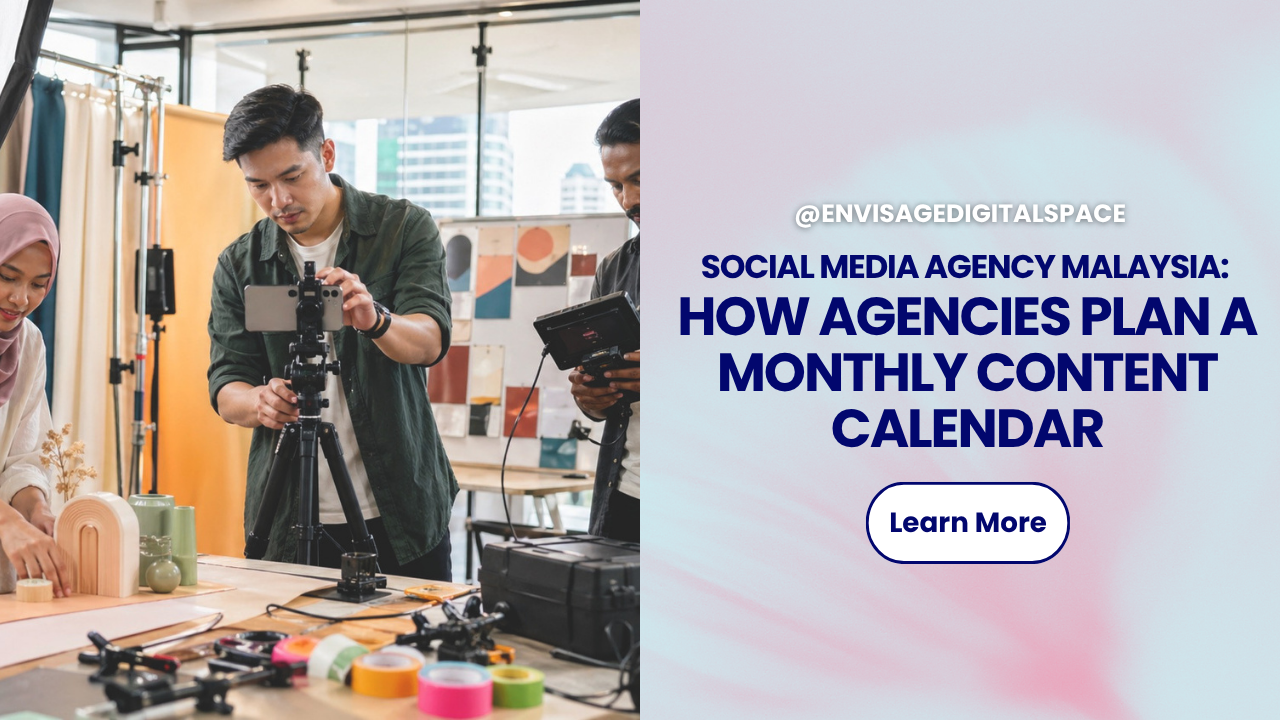
Social Media Agency Malaysia: How Agencies Plan a Monthly Content Calendar
Social media has become one of the most important channels for businesses looking to build brand awareness, engage customers, and generate consistent online visibility. However, maintaining an active social media presence requires much more than simply publishing posts whenever there is something to share.
Successful social media marketing depends on consistency, strategic planning, creative execution, and a clear understanding of audience behaviour. For Malaysian businesses managing multiple platforms, planning content several weeks in advance can also become increasingly time-consuming.
This is why many businesses work with a specialised Social Media Agency to develop and manage their monthly content calendars. A professional agency can organise content around business objectives, upcoming campaigns, audience interests, seasonal opportunities, and platform-specific requirements.
Rather than creating individual posts without a clear direction, agencies use monthly content calendars to establish a structured roadmap for what a brand should publish, when it should be published, and how each piece of content contributes to broader marketing goals.
In this guide, we’ll explore how a Social Media Agency Malaysia plans a monthly content calendar and why strategic content planning is essential for businesses looking to build a consistent and effective social media presence.
Why Businesses Need a Monthly Social Media Content Calendar
Without proper planning, social media content can quickly become repetitive, inconsistent, or disconnected from a brand’s overall marketing strategy.
Businesses may find themselves rushing to create posts at the last minute, repeating the same topics, or missing important dates and promotional opportunities. A monthly content calendar helps prevent these problems by providing a clear structure for content production and publishing.
A Social Media Agency typically begins by identifying what the business wants to achieve during the month. These objectives could include increasing brand awareness, promoting a new product, generating leads, driving website traffic, increasing engagement, or supporting a specific marketing campaign.
Once the objectives are established, the agency can develop content themes and formats that support those goals. This ensures that every post has a purpose rather than simply filling the social media feed.
Monthly planning also gives businesses greater visibility over their upcoming content. Marketing teams can review the calendar in advance, make adjustments, prepare visual assets, and ensure that important campaigns are properly coordinated.
What Does a Social Media Agency Consider Before Building a Content Calendar?
Before creating a monthly content calendar, a Social Media Agency needs to understand the brand, its audience, competitors, marketing objectives, and existing social media performance.
The agency may review previous content to identify which topics, formats, and messages generated the strongest engagement. They can also analyse audience demographics and behaviour to determine what types of content are most relevant to the target market.
For Malaysian businesses, localisation can also play an important role. Cultural events, public holidays, local consumer behaviour, popular trends, and seasonal shopping periods can all influence the type of content that performs well.
An agency may also consider the platforms the business is using. Content that works effectively on Instagram may require a different approach on Facebook, TikTok, or LinkedIn.
By considering these factors before planning begins, the agency can create a content calendar that is aligned with both the brand and its target audience.
Establishing Monthly Content Pillars
One of the first steps in developing a content calendar is establishing clear content pillars.
Content pillars are the major themes that guide what a brand consistently talks about on social media. Depending on the business, these could include educational content, product information, customer stories, behind-the-scenes content, industry insights, promotional campaigns, or entertainment-focused posts.
A Social Media Agency uses these pillars to create variety while maintaining a consistent brand identity.
For example, a Malaysian skincare brand may use educational skincare tips, product demonstrations, customer testimonials, ingredient information, and promotional content as its main content pillars.
Instead of repeatedly promoting products, the brand can provide useful information while naturally introducing its products into relevant conversations.
This approach helps create a more balanced social media presence and reduces the risk of audiences feeling that every post is simply an advertisement.
Balancing Different Types of Social Media Content
A strong monthly content calendar usually includes a mixture of content formats and purposes.
Promotional content can communicate offers, product launches, events, and important announcements. Educational content can answer customer questions and establish the brand as a useful source of information. Engagement-driven content can encourage audiences to comment, share opinions, or participate in conversations.
A Social Media Agency carefully balances these different content types so that the social media feed does not become overly promotional.
The exact balance depends on the brand, industry, audience, and campaign objectives. A fashion brand may rely heavily on visual content and styling inspiration, while a B2B company may focus more heavily on educational posts, industry insights, and thought leadership.
The objective is to create a content mix that keeps audiences interested while still supporting the business’s commercial goals.
Planning Content Around Important Dates and Campaigns
Monthly content calendars also allow agencies to plan around important dates, events, and marketing campaigns.
For Malaysian businesses, this could include public holidays, festive periods, shopping events, product launches, company anniversaries, industry events, or major promotional periods.
Planning these opportunities in advance allows the brand to develop relevant creative concepts rather than attempting to produce content at the last minute.
For example, a business preparing for Hari Raya may begin developing campaign concepts, promotional messaging, visual assets, and supporting social media content weeks before the actual festive period.
A Social Media Agency can integrate these events into the wider monthly calendar while ensuring that seasonal content does not completely overwhelm the brand’s regular communication.
This creates a more organised approach where campaigns, evergreen content, and timely posts work together.
Matching Content With Different Social Media Platforms
Not every piece of content should automatically be published across every social media platform in exactly the same format.
Each platform has its own audience behaviour, content formats, and communication style. Instagram may prioritise visually engaging posts, Reels, and Stories, while TikTok is heavily focused on short-form video and entertainment-driven discovery. Facebook can support a broader mixture of community, promotional, and informational content.
A Social Media Agency considers these differences when developing the monthly calendar.
Instead of simply copying one post across multiple platforms, agencies can adapt the message, creative format, caption, and publishing approach to suit each channel.
This allows brands to maintain consistent messaging while still creating platform-appropriate content.
Incorporating Trending Topics and Real-Time Opportunities
Although monthly content calendars provide structure, they should not be completely rigid.
Social media trends can emerge unexpectedly, and audiences may respond strongly to current conversations, viral formats, popular sounds, or breaking industry developments.
A Social Media Agency therefore typically leaves room within the calendar for reactive and real-time content.
This flexibility allows brands to participate in relevant trends without disrupting their broader content strategy.
For example, if a particular TikTok format becomes popular and is relevant to the brand, the agency may adjust the planned schedule to incorporate the trend.
The key is finding a balance between long-term planning and real-time creativity. A calendar provides direction, but it should still allow the brand to respond to opportunities as they arise.
Using Audience Insights to Improve Content Planning
A monthly content calendar should not be based entirely on assumptions.
Social media platforms provide valuable performance data that can help agencies understand what audiences respond to. Metrics such as engagement, reach, video views, watch time, saves, shares, profile visits, and link clicks can reveal which types of content are attracting attention.
A Social Media Agency reviews this information when planning future content.
If educational videos consistently generate strong engagement, the agency may increase the frequency of educational content. If certain promotional posts receive limited interaction, the agency may experiment with different creative approaches or messaging.
This creates a continuous feedback loop where previous performance influences future planning.
Over time, content calendars become increasingly informed by actual audience behaviour rather than relying solely on assumptions about what might perform well.
Coordinating Content Creation and Approval
Another important part of monthly content planning is coordinating the production process.
Once the content calendar has been established, the agency needs to determine what assets are required for each post. This may include photography, graphic design, video production, animations, captions, product information, or influencer content.
Planning these requirements in advance gives the creative team sufficient time to produce the necessary materials.
The approval process can also be organised around the calendar. Clients can review upcoming content, provide feedback, and approve posts before their scheduled publishing dates.
A structured workflow helps reduce last-minute changes and prevents delays from affecting the overall publishing schedule.
For businesses working with an external Social Media Agency, this process also creates clearer communication between the agency and internal marketing teams.
Maintaining Brand Consistency Throughout the Month
Consistency is another major consideration when building a monthly content calendar.
A brand should maintain a recognisable visual identity, tone of voice, messaging style, and overall personality across its social media channels.
A Social Media Agency uses the content calendar to ensure that individual posts work together as part of a larger brand story.
This does not mean every post needs to look identical. Instead, the content should feel connected through consistent branding, messaging, and creative direction.
Maintaining this consistency helps audiences recognise the brand more easily and creates a more professional social media presence.
Measuring the Performance of the Monthly Content Calendar
Once the content has been published, the agency can evaluate how effectively the monthly strategy performed.
Performance analysis can include engagement rates, reach, impressions, follower growth, website traffic, leads, conversions, video performance, and other metrics relevant to the business objectives.
The agency can then compare actual performance with the goals established at the beginning of the month.
This analysis helps identify successful content formats and areas that require improvement.
For example, a business may discover that short educational videos generate significantly more engagement than static promotional graphics. These insights can then influence the following month’s content strategy.
As a result, monthly content planning becomes an ongoing process of testing, analysing, and refining rather than a one-time activity.
The Advantage of Working With a Social Media Agency
Managing a monthly social media content calendar requires strategic planning, creative production, platform knowledge, trend monitoring, performance analysis, and consistent execution.
For businesses handling these responsibilities internally, the workload can become difficult to manage, particularly when multiple social media platforms and campaigns are involved.
A specialised Social Media Agency brings together strategists, content creators, designers, copywriters, and social media specialists who can manage different aspects of the process.
This allows businesses to maintain a consistent publishing schedule while ensuring that content remains aligned with broader marketing objectives.
An agency can also provide an outside perspective, helping brands identify content opportunities, improve weak areas, and adapt their strategy based on changing audience behaviour.
For businesses looking to build a stronger and more organised social media presence, professional content calendar management can provide a structured foundation for long-term digital marketing efforts.
Conclusion
A monthly social media content calendar is much more than a schedule of posts. It provides businesses with a strategic framework for organising content, coordinating campaigns, maintaining consistency, responding to trends, and measuring performance.
A specialised Social Media Agency Malaysia can take this process further by combining audience insights, creative strategy, platform expertise, and performance data to develop content that supports specific business objectives.
Instead of creating social media content randomly or reacting to deadlines at the last minute, businesses can use a structured monthly strategy to maintain a consistent and purposeful online presence.
For Malaysian businesses looking to improve their social media marketing, working with an experienced Social Media Agency can provide the strategic direction and resources needed to plan, execute, and optimise content more effectively.
At Envisage Digital Space, we help Malaysian businesses develop structured social media strategies built around their audiences, platforms, campaigns, and business objectives. From monthly content planning and creative development to social media management and performance reporting, our team helps brands build a consistent digital presence designed for long-term growth.
Frequently Asked Questions
What is a social media content calendar?
A social media content calendar is a planned schedule that outlines what content a brand will publish, when it will be published, and which social media platform it will appear on. It helps businesses organise their content and maintain consistency.
How does a Social Media Agency create a monthly content calendar?
A Social Media Agency typically reviews the brand’s objectives, target audience, previous performance, upcoming campaigns, important dates, trends, and platform requirements before developing a monthly content plan.
How far in advance should social media content be planned?
Many businesses plan their core social media content several weeks ahead, often for an entire month. However, agencies usually leave some flexibility for real-time trends, timely topics, and unexpected marketing opportunities.
Should the same content be posted on every social media platform?
Not necessarily. While a brand can maintain consistent messaging across platforms, content should generally be adapted to the format, audience behaviour, and communication style of each social media channel.
Why should businesses hire a Social Media Agency?
A Social Media Agency can provide strategic planning, content creation, platform expertise, trend monitoring, campaign coordination, and performance analysis, helping businesses manage their social media presence more systematically.