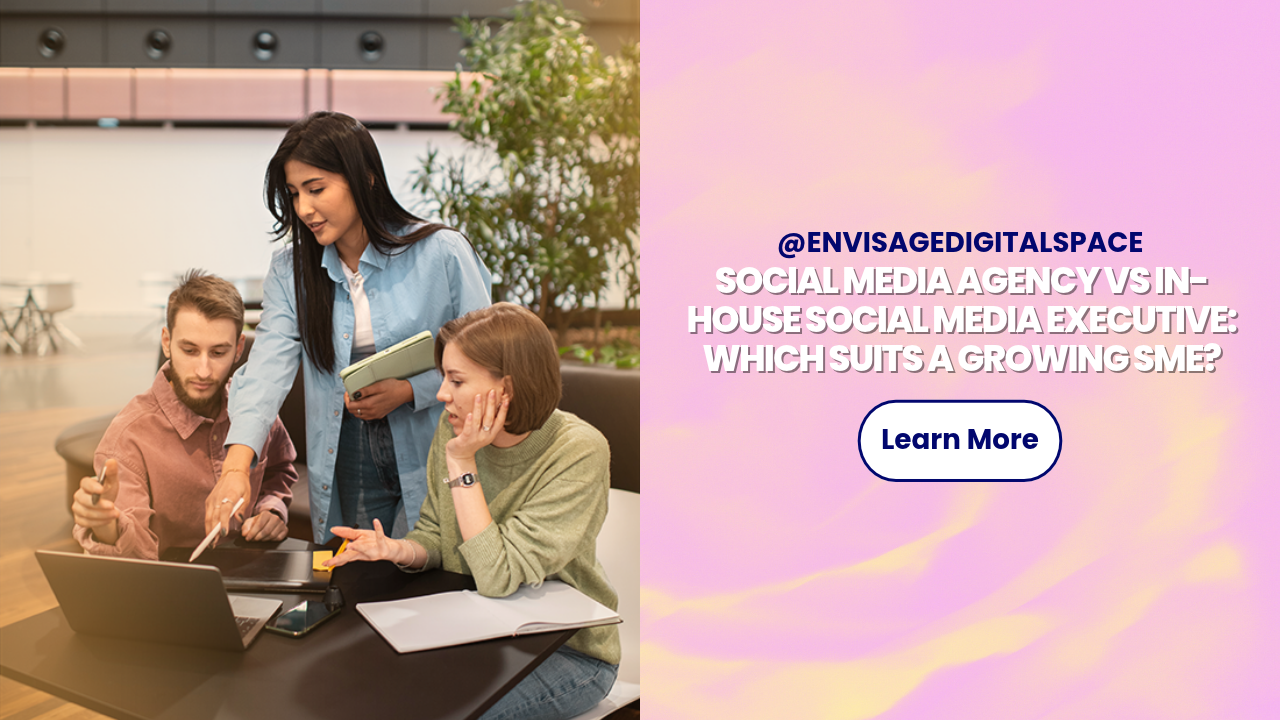
Social Media Agency vs In-House Social Media Executive: Which Suits a Growing SME?
As small and medium-sized enterprises (SMEs) grow, social media becomes an increasingly important part of their marketing strategy. Platforms such as Instagram, TikTok, Facebook, LinkedIn, and Xiaohongshu offer businesses opportunities to build brand awareness, connect with customers, generate leads, and increase sales. However, maintaining a consistent and effective social media presence requires more than simply publishing posts.
One of the biggest decisions growing SMEs face is whether to hire an in-house social media executive or work with a professional Social Media Agency. Both options offer different advantages, costs, and levels of expertise, making the right choice dependent on a company’s business goals, available resources, and long-term growth plans.
An in-house executive provides dedicated attention to the brand and direct communication with internal teams. Meanwhile, a Social Media Agency offers access to a wider range of specialists, creative resources, marketing tools, and strategic experience without requiring a business to build an entire department.
For SMEs working with limited budgets and growing operational demands, choosing the right approach can significantly influence marketing efficiency and business performance.
This guide explores the differences between hiring an in-house social media executive and partnering with a Social Media Agency, helping growing SMEs determine which option best supports their marketing objectives.
What Is the Difference Between a Social Media Agency and an In-House Social Media Executive?
Before comparing the two options, it is important to understand how each arrangement works.
An in-house social media executive is an employee who manages a company’s social media activities internally. Their responsibilities may include planning content, writing captions, scheduling posts, responding to customers, monitoring engagement, and preparing performance reports. Depending on the company’s resources, they may also handle basic photography, video editing, and advertising activities.
A Social Media Agency, on the other hand, is an external marketing partner that provides social media services to businesses. Rather than relying on one employee, companies gain access to a team that may include social media strategists, content creators, graphic designers, copywriters, video editors, advertising specialists, and account managers.
The main difference is the structure of the resources available. An in-house executive provides dedicated internal support, while an agency offers access to a broader range of expertise and marketing capabilities.
Neither option is automatically better. The right choice depends on how much support your business needs and how quickly your social media operations are expected to grow.
Social Media Agency vs In-House Social Media Executive: 10 Key Differences SMEs Should Consider
1. Overall Cost and Budget Management
Cost is often one of the first considerations for growing SMEs.
Hiring an in-house social media executive involves more than paying a monthly salary. Businesses must also account for employee benefits, statutory contributions, recruitment expenses, training, software subscriptions, equipment, and other operational costs.
While employing one person may initially appear affordable, additional resources may be necessary when the business requires professional photography, video production, graphic design, or paid advertising management.
Working with a Social Media Agency usually involves a monthly retainer or a customised service package. Although the upfront service fee may appear higher than an individual employee’s salary, it can include access to several specialists and marketing resources.
For SMEs with limited budgets, an agency may provide a more predictable way to access multiple marketing capabilities without committing to several full-time hires.
However, businesses with consistent daily social media requirements may find an in-house employee more cost-effective over time.
2. Range of Skills and Expertise
Social media marketing involves several specialised skills, including content strategy, copywriting, graphic design, video editing, audience research, advertising, and performance analysis.
An in-house social media executive may be capable of managing multiple responsibilities, but it is difficult for one individual to possess advanced expertise in every area.
A Social Media Agency typically provides access to professionals with different specialisations. This allows businesses to benefit from strategic planning, creative development, advertising management, and analytics within one team.
For example, a campaign may require a strategist to develop the concept, a designer to create visual assets, a copywriter to refine the messaging, and a video editor to produce short-form content.
This collaborative approach can improve the overall quality and consistency of social media campaigns.
For SMEs that want to expand their marketing capabilities without hiring multiple specialists, an agency can offer a significant advantage.
3. Understanding of Your Brand and Business
One of the strongest advantages of an in-house social media executive is their familiarity with the company’s internal operations.
Because they work directly within the organisation, they can communicate with different departments, understand product updates, attend meetings, and respond quickly to changes in business priorities.
This familiarity can help ensure that social media content reflects the company’s culture, brand personality, and day-to-day activities.
A Social Media Agency may initially require more time to understand the business, its target audience, products, services, and brand positioning. However, a reliable agency should conduct proper onboarding, research, and strategic consultation before launching campaigns.
Once the working relationship is established, agencies can develop content strategies that align with the company’s identity and marketing objectives.
The key difference is that in-house employees gain brand familiarity through daily involvement, while agencies build it through structured communication, research, and ongoing collaboration.
4. Content Creation and Creative Resources
Consistent, high-quality content is essential for maintaining an effective social media presence.
An in-house executive may be able to create basic graphics, write captions, and produce simple videos using accessible tools. This can be sufficient for businesses with straightforward content requirements.
However, more demanding campaigns may require professional photography, advanced video editing, motion graphics, creative direction, and platform-specific content production.
A Social Media Agency often has access to a wider range of creative resources and specialised personnel. This makes it easier to produce different content formats while maintaining a consistent visual identity.
For example, an SME launching a new product may need promotional videos, product photography, educational posts, customer testimonials, and advertising creatives. An agency can coordinate these materials as part of one integrated campaign.
For businesses that rely heavily on visual storytelling and frequent content production, access to professional creative resources can make a noticeable difference.
5. Content Consistency and Publishing Frequency
Maintaining a consistent publishing schedule can become challenging when a business depends on a single employee.
An in-house executive may have to manage content planning, customer enquiries, internal meetings, campaign coordination, reporting, and administrative responsibilities simultaneously. When unexpected tasks arise, content production and publishing may be delayed.
A Social Media Agency generally operates with established workflows, content calendars, approval processes, and production schedules. These systems help ensure that content is planned and delivered consistently.
Agencies may also have team members who can support one another when workloads increase or deadlines become more demanding.
However, consistency still depends on the quality of communication and approval processes between the agency and the client.
For growing SMEs that want a more structured approach to social media management, an agency can help reduce the pressure of handling every marketing task internally.
6. Access to Marketing Tools and Technology
Effective social media management often requires more than the platforms’ built-in publishing features.
Businesses may need scheduling software, social listening tools, analytics platforms, content design applications, advertising dashboards, and reporting systems to manage their campaigns effectively.
An in-house executive may require the company to purchase and maintain these tools separately. Additional training may also be necessary to ensure that the employee can use them efficiently.
A Social Media Agency may already have established subscriptions, workflows, and reporting systems that support multiple client accounts.
This can give SMEs access to professional marketing tools without having to independently research, purchase, and manage every platform.
Nevertheless, businesses should always clarify which tools are included in an agency’s service package and whether any additional software or advertising costs apply.
7. Flexibility and Ability to Scale
As SMEs grow, their social media requirements may change.
A small business may initially need only a few weekly posts. However, as its customer base expands, it may require more frequent content, influencer collaborations, paid advertisements, additional platforms, and larger campaigns.
Scaling an in-house team may involve recruiting additional employees, providing training, and expanding the company’s marketing budget.
A Social Media Agency can often adjust its services based on changing requirements. Businesses may be able to expand content production, introduce new platforms, or add advertising and influencer marketing support through a revised service arrangement.
This flexibility can be especially useful for SMEs experiencing seasonal demand, product launches, or rapid business expansion.
However, businesses should check an agency’s capacity, service limitations, and pricing structure before assuming that additional work can be accommodated immediately.
8. Communication and Response Time
Communication plays an important role in keeping social media activities aligned with business priorities.
An in-house social media executive can usually communicate directly with management and other departments. This makes it easier to obtain product information, clarify promotions, and respond to urgent internal requests.
A Social Media Agency operates externally, meaning communication usually takes place through scheduled meetings, messaging platforms, emails, and account management channels.
Although this arrangement may involve additional coordination, professional agencies often establish dedicated points of contact and agreed response procedures to keep projects organised.
For businesses that require immediate daily coordination, an in-house employee may be more convenient.
For SMEs that prioritise structured campaign management and do not require constant internal communication, an agency can provide an efficient alternative.
9. Performance Tracking and Marketing Strategy
Publishing content consistently does not necessarily mean that a business is achieving its marketing goals.
SMEs need to understand whether their social media activities are generating meaningful results, such as website visits, enquiries, leads, conversions, and customer engagement.
An in-house executive may track basic performance indicators, including follower growth, reach, impressions, and engagement rates. However, deeper analysis may require additional knowledge of advertising performance, customer behaviour, attribution, and conversion tracking.
A Social Media Agency may provide more comprehensive reporting by combining social media analytics with campaign performance and business objectives.
Rather than focusing solely on vanity metrics, an experienced agency should help businesses understand which content formats, platforms, and campaigns are contributing to measurable results.
This allows SMEs to make more informed decisions about their marketing budgets and future strategies.
10. Accountability and Long-Term Marketing Direction
Another important consideration is how social media activities contribute to the company’s long-term growth.
An in-house executive can develop a deep understanding of the business over time and maintain continuity in its marketing operations. Their involvement in internal discussions can also help ensure that social media activities reflect changing company priorities.
A Social Media Agency brings an external perspective that may help identify new opportunities, evaluate competitors, and introduce different marketing approaches.
Agencies can also provide structured campaign reviews and strategic recommendations based on performance data and industry experience.
However, businesses should avoid assuming that outsourcing automatically guarantees better results. A good agency should communicate its responsibilities, deliverables, performance indicators, and reporting arrangements clearly.
Ultimately, the most effective arrangement is one where social media activities are connected to measurable business objectives rather than simply producing content for the sake of maintaining an online presence.
When Should SMEs Hire an In-House Social Media Executive?
An in-house social media executive may be the better option for businesses that require constant internal coordination and direct involvement in daily operations.
For example, retail businesses, restaurants, hospitality brands, and companies with frequent product updates may benefit from having someone physically present to capture daily activities, communicate with employees, and respond to customer enquiries.
An in-house employee can also be useful when a company already has an established marketing department and only needs someone dedicated to managing its social media channels.
Businesses should consider this option when they have a consistent workload, sufficient budget for employment costs, and the ability to provide the necessary training, equipment, and creative resources.
However, it is important to recognise that one employee may eventually become overwhelmed if the company’s social media requirements expand beyond their capabilities.
When Should SMEs Work With a Social Media Agency?
A Social Media Agency is often a suitable option for SMEs that need access to multiple marketing skills but do not have the resources to build a complete internal team.
Startups and growing businesses may benefit from outsourcing social media management because it allows them to focus on their core operations while experienced professionals handle content planning, creative production, campaign execution, and performance monitoring.
An agency can also be valuable when businesses want to expand onto additional platforms, launch paid advertising campaigns, improve their content quality, or introduce more structured marketing strategies.
For companies that are experiencing rapid growth, working with an agency can provide access to specialised resources without the long-term commitment of recruiting several full-time employees.
The most important factor is choosing an agency that understands the company’s industry, target audience, budget, and business objectives.
Can SMEs Combine an In-House Executive With a Social Media Agency?
For some growing SMEs, the best solution may not be choosing one option over the other.
A hybrid approach allows businesses to combine the internal knowledge of an in-house executive with the specialised expertise of a Social Media Agency.
The in-house employee can manage daily communication, gather product information, coordinate internal approvals, and provide updates about the company’s operations.
Meanwhile, the agency can focus on strategic planning, creative direction, content production, advertising management, and performance reporting.
This arrangement creates a more collaborative marketing structure where internal employees and external specialists support different parts of the same strategy.
For example, a Malaysian F&B business may have an in-house employee responsible for capturing daily restaurant activities and responding to customer messages, while an agency manages campaign planning, promotional videos, paid advertisements, and influencer collaborations.
Although this approach involves additional coordination and costs, it can be effective for SMEs that have outgrown basic social media management but are not ready to establish a full internal marketing department.
Common Mistakes SMEs Make When Choosing Between an Agency and an In-House Executive
One common mistake is comparing an agency’s monthly fee directly with an employee’s salary without considering the full cost of each arrangement.
An employee’s salary does not automatically include professional creative production, specialised marketing tools, advertising expertise, or additional personnel. Similarly, an agency’s monthly retainer does not necessarily cover every service a business may require.
Another mistake is hiring based solely on the number of posts promised each month. While publishing frequency matters, businesses should also consider content quality, audience relevance, campaign objectives, and the ability to measure results.
Some SMEs also underestimate the importance of communication. An external agency cannot produce effective content without receiving accurate business information, timely feedback, and clear approval from the client.
On the other hand, businesses that hire an in-house executive without providing sufficient training, tools, or direction may place unrealistic expectations on one individual.
Before making a decision, SMEs should evaluate their actual marketing requirements, available resources, expected workload, and long-term growth plans.
The right choice should improve the company’s marketing capabilities rather than simply fill a position or outsource a list of tasks.
Why Work With a Professional Social Media Agency?
Managing social media effectively requires a combination of strategic planning, creative execution, platform knowledge, audience research, and performance analysis.
For growing SMEs, building all these capabilities internally can require significant time, recruitment, training, and financial investment.
A professional Social Media Agency provides access to specialised expertise and established workflows that help businesses manage their social media activities more efficiently.
Instead of relying on one individual to handle every responsibility, companies can benefit from a team that understands different aspects of digital marketing, from content creation and community engagement to paid advertising and campaign optimisation.
At Envisage Digital Space, we help Malaysian businesses strengthen their digital presence through strategic and performance-driven marketing solutions. From social media management and content creation to KOL campaigns, paid advertising, and digital strategy, we develop customised approaches designed around each brand’s objectives.
Whether your business needs to establish a consistent social media presence, improve audience engagement, or generate more qualified leads, having the right marketing partner can help turn social media activities into meaningful business opportunities.
Conclusion
Choosing between a Social Media Agency and an in-house social media executive depends on your SME’s budget, operational requirements, available resources, and long-term marketing objectives.
An in-house executive offers direct communication, daily brand involvement, and greater internal familiarity. A Social Media Agency provides access to broader expertise, creative resources, professional tools, and the flexibility to support different marketing requirements.
For smaller businesses with straightforward social media needs, hiring an internal executive may be sufficient. However, SMEs that require specialised skills, consistent creative production, and more comprehensive marketing strategies may benefit from working with an agency.
Some growing companies may even find that combining both approaches creates the most effective arrangement.
Ultimately, the goal should not simply be to choose the cheaper option. It should be to build a social media operation that supports brand growth, strengthens customer relationships, and delivers measurable business results.
If your business is ready to improve its social media strategy and build a stronger digital presence, Envisage Digital Space can help you develop a customised approach that aligns with your marketing goals.
Frequently Asked Questions
Is it cheaper to hire a Social Media Agency or an in-house social media executive?
The cost depends on the scope of work and the resources required. An in-house executive involves salary, employment benefits, training, equipment, and software expenses. A Social Media Agency typically charges a monthly retainer or project fee, which may provide access to multiple specialists. SMEs should compare the total cost of each option rather than looking at salary or agency fees alone.
What does a Social Media Agency do for an SME?
A Social Media Agency helps SMEs plan, manage, and improve their social media presence. Services may include content strategy, social media management, graphic design, video production, copywriting, community engagement, paid advertising, influencer marketing, and performance reporting. The exact services depend on the agency's capabilities and the selected package.
When should a growing SME outsource social media management?
An SME should consider outsourcing when its social media requirements exceed its internal capabilities, content production becomes inconsistent, or the business needs specialised marketing expertise. Outsourcing may also be useful when a company wants to expand onto new platforms or run more advanced advertising campaigns without hiring additional employees.
Can an in-house social media executive work together with a Social Media Agency?
Yes. A hybrid arrangement allows an in-house executive to handle daily communication, internal coordination, and brand updates while an agency manages strategic planning, creative production, advertising, and performance analysis. This can be an effective solution for SMEs that need both internal brand familiarity and external marketing expertise.
How do I choose the right Social Media Agency in Malaysia?
Start by evaluating the agency's experience, service offerings, creative capabilities, communication process, reporting methods, and understanding of your industry. Review its previous work and ask how it measures campaign performance. Most importantly, choose a Social Media Agency that understands your business objectives and can develop a strategy based on your actual needs rather than offering a one-size-fits-all package.