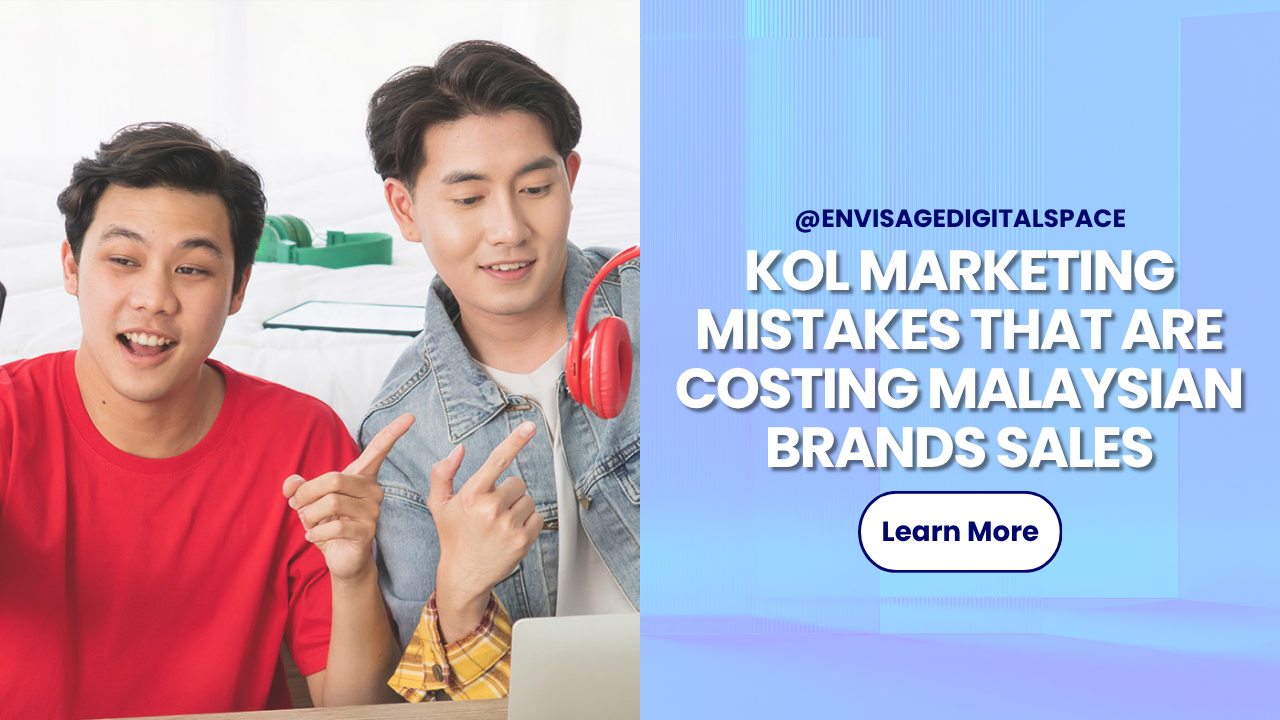
KOL Marketing Mistakes That Are Costing Malaysian Brands Sales
KOL Marketing has become an increasingly important strategy for Malaysian brands looking to build awareness, reach new audiences, and influence purchasing decisions. From beauty and fashion to food and beverage, lifestyle, and consumer technology, businesses are partnering with Key Opinion Leaders (KOLs) to promote their products across platforms such as Instagram, TikTok, YouTube, and Xiaohongshu (XHS).
However, investing in KOL Marketing does not automatically guarantee sales. Some campaigns generate thousands of views but very few enquiries, while others receive impressive engagement without producing meaningful conversions. For Malaysian businesses operating with limited marketing budgets and increasingly competitive digital markets, these results can represent a significant waste of resources.
The problem is not necessarily that KOL Marketing does not work. More often, the issue lies in how brands plan their campaigns, select creators, communicate their messages, and measure performance. A creator with a large following may not reach the right audience, while a campaign with attractive content may fail to give potential customers a compelling reason to purchase.
Effective KOL Marketing requires more than paying an influencer to publish a promotional post. Brands need a clear understanding of their target audience, campaign objectives, creator suitability, content strategy, and conversion journey. They must also consider Malaysia’s multicultural market, where language preferences, cultural relevance, purchasing habits, and platform usage can influence campaign outcomes.
An experienced KOL Marketing agency can help businesses identify these challenges and develop campaigns that connect creator influence with measurable business results. This guide explores the most common KOL Marketing mistakes that are costing Malaysian brands sales, explains why they happen, and outlines how businesses can avoid them.
Choosing KOLs Based on Follower Count Alone
One of the most common KOL Marketing mistakes is choosing creators primarily because they have a large number of followers. Although follower count can indicate potential reach, it does not necessarily reflect audience relevance, trust, engagement quality, or purchasing intent.
A Malaysian brand may partner with a creator who has hundreds of thousands of followers, only to discover that much of the audience consists of people who have little interest in its products. Another creator with a smaller but more relevant following may generate stronger enquiries and sales because their audience trusts their recommendations and actively seeks their opinions.
This distinction is particularly important for businesses selling specialised products. A skincare brand, for example, may benefit more from working with a creator who regularly discusses skincare ingredients and routines than from partnering with a general entertainment influencer whose audience has limited interest in beauty products.
Brands should therefore evaluate potential KOLs based on their audience demographics, content niche, engagement quality, credibility, and ability to influence purchasing decisions. They should also examine whether the creator’s followers match the brand’s intended customer profile in Malaysia.
An effective KOL Marketing strategy focuses on the quality of influence rather than the size of the audience alone. By prioritising relevance and audience trust, brands can reduce wasted exposure and improve their chances of turning attention into sales.
Failing to Define Clear Campaign Objectives
Another costly mistake is launching a KOL Marketing campaign without defining what success should look like.
Some brands enter influencer partnerships simply because competitors are doing it or because creator content appears popular on social media. Without a clear objective, it becomes difficult to determine which creators to hire, what content to produce, or how to evaluate the campaign afterwards.
Different objectives require different strategies. A campaign designed to introduce a new product to the Malaysian market may prioritise reach, awareness, and content visibility. A campaign intended to drive immediate sales, however, needs a stronger focus on product demonstrations, purchasing incentives, trackable links, and clear calls to action.
The problem arises when brands expect a campaign designed for awareness to deliver immediate conversions without considering the customer journey. A viewer who encounters a brand for the first time may need several interactions before feeling confident enough to make a purchase.
Before investing in KOL Marketing, businesses should establish specific objectives and relevant key performance indicators (KPIs). These may include qualified traffic, product page visits, voucher redemptions, enquiries, purchases, customer acquisition cost, or return on investment, depending on the campaign’s purpose.
A professional KOL Marketing agency can help brands align campaign objectives with creator selection, content formats, budget allocation, and measurement methods. This ensures that every partnership serves a defined business purpose rather than simply generating social media activity.
Ignoring Audience Demographics and Local Market Relevance
Malaysia is a diverse market with different languages, cultural backgrounds, consumer preferences, and shopping behaviours. A creator who performs well with one audience may not necessarily be effective at reaching another.
For example, a brand targeting Chinese-speaking Malaysian consumers may explore creators who produce relevant content in Mandarin or have an established audience on Xiaohongshu. A campaign aimed at younger consumers might benefit from creators whose content style and audience align with TikTok. Meanwhile, a brand targeting a broader national audience may need a more diverse mix of creators and communication styles.
Choosing a KOL without considering these differences can lead to impressive-looking reach figures that fail to translate into relevant traffic or purchases.
Brands should look beyond a creator’s public persona and examine who actually watches and interacts with their content. Audience location, language, age range, interests, and purchasing behaviour can all influence whether a partnership is commercially suitable.
Local relevance also extends to the content itself. References to Malaysian food culture, local shopping habits, familiar situations, and relevant festive periods may help a campaign feel more relatable when they genuinely fit the audience and brand.
Successful KOL Marketing does not simply place a product in front of as many people as possible. It places the product in front of people who are most likely to understand its value and consider buying it.
Working With Creators Whose Content Does Not Match the Brand
A creator can have an engaged audience and still be the wrong choice for a particular campaign.
One reason is the mismatch between the creator’s usual content and the brand’s identity. A premium skincare brand, for example, may struggle to communicate its positioning through a creator whose content is consistently built around exaggerated humour and rapid-fire product promotions. Similarly, a brand that depends on technical product explanations may not benefit from a creator who rarely discusses product features in detail.
The issue is not that creators must adopt a single style. In fact, their individuality is often what makes them influential. The challenge is finding a partnership where the creator’s natural voice complements the brand’s positioning and campaign objectives.
Brands should review a creator’s previous collaborations, storytelling style, audience responses, and overall reputation before making a decision. They should also consider whether the product genuinely fits the creator’s interests and the type of recommendations their audience expects.
A good KOL partnership should feel relevant rather than forced. When a product naturally fits the creator’s content, the recommendation is more likely to feel credible and give potential customers a reason to pay attention.
An experienced KOL Marketing agency can assess creator-brand compatibility before a campaign begins, helping businesses avoid partnerships that may generate exposure but weaken brand perception or fail to encourage purchases.
Focusing on Viral Content Instead of Purchase Intent
Viral content can be valuable, but virality alone does not guarantee commercial success.
A video may receive hundreds of thousands of views because it is funny, controversial, surprising, or entertaining. However, if viewers remember the joke but forget the product, the campaign may deliver little business value.
This is a common challenge in KOL Marketing because brands can become overly focused on views, likes, shares, and follower growth. These metrics are easy to observe, but they do not always reveal whether the content attracts people who are interested in purchasing.
Content that supports sales needs to communicate why the product matters. Depending on the category, this could involve demonstrating how a product works, explaining its benefits, addressing common objections, comparing relevant features, or showing how it fits into everyday life.
For instance, a Malaysian food brand may benefit from content that showcases the dining experience, highlights popular menu items, explains the location, and encourages viewers to visit or order. A beauty brand may need a creator to demonstrate product texture, explain usage, and discuss suitability rather than simply displaying attractive packaging.
The strongest campaigns balance entertainment with commercial relevance. Content should capture attention while giving viewers enough useful information to understand the product and take the next step.
Rather than asking whether a KOL can make a video go viral, brands should ask whether that creator can attract the right attention and turn it into genuine consideration.
Providing Weak Briefs and Overly Restrictive Creative Guidelines
A poorly written campaign brief can undermine an otherwise promising KOL partnership.
Some brands provide creators with little more than a product name and a posting deadline. Others take the opposite approach by dictating every sentence, scene, expression, and camera angle. Both approaches can produce disappointing results.
Without sufficient direction, creators may overlook important product benefits, misunderstand the campaign objective, or communicate inaccurate information. When the brief is too restrictive, however, the content may lose the creator’s natural personality and sound like a conventional advertisement.
KOL Marketing works best when brands establish clear expectations while allowing creators enough creative freedom to communicate in a style their audience recognises.
A strong brief should explain the target audience, campaign objective, key product benefits, mandatory information, brand guidelines, deliverables, deadlines, disclosure requirements, and desired call to action. It should also clarify any claims that cannot be made, especially for categories where advertising rules and product claims require careful attention.
Creators should understand what the brand needs to communicate and why those messages matter. At the same time, they should be encouraged to adapt the presentation to their own voice, provided the final content remains accurate and aligned with the campaign.
This balance helps brands maintain control over essential messaging without sacrificing the authenticity that makes creator partnerships effective.
Failing to Give Customers a Clear Reason to Buy
Even highly engaging KOL content can fail to generate sales if viewers do not understand what they should do next or why they should act.
A creator may introduce a product, explain its benefits, and receive enthusiastic comments, but the campaign can still lose potential customers if the purchase process is unclear. Viewers may not know where to buy the product, whether it is available in Malaysia, how much it costs, or whether a promotion is still valid.
This is where a clear call to action becomes essential.
Depending on the campaign, creators can direct viewers to a product page, an official online store, a physical outlet, a booking page, or a relevant marketplace listing. Brands may also use trackable links, campaign-specific discount codes, limited-time bundles, or other suitable incentives to help interested viewers move towards a purchase.
However, discounts should not be treated as the only way to encourage conversions. Some customers need reassurance about product quality, usage, compatibility, delivery, or after-sales support before they are ready to buy. Providing the right information can be just as important as offering a promotion.
Malaysian brands should also ensure that their landing pages, product listings, stock availability, and checkout experience are ready before the campaign launches. If customers encounter confusing information, unexpected costs, or unavailable products after clicking through, the brand risks losing sales despite generating strong interest.
Effective KOL Marketing connects the creator’s recommendation to a simple and reliable buying experience. The fewer unnecessary obstacles customers face, the easier it becomes for campaign interest to translate into revenue.
Ignoring the Importance of Authenticity and Trust
Audiences are regularly exposed to sponsored content, product endorsements, and promotional messages. As a result, they can become sceptical when every creator recommendation appears overly enthusiastic or commercially motivated.
A KOL who promotes too many unrelated products may struggle to maintain credibility. Similarly, a partnership can feel unconvincing when a creator endorses a product that has little connection to their usual interests or makes exaggerated claims that are difficult to support.
Trust is one of the most valuable assets in KOL Marketing because it influences how audiences interpret recommendations. If followers believe that a creator understands a product and communicates honestly, they may be more willing to investigate the brand further.
Brands can protect this trust by choosing creators who are genuinely suited to their products, providing accurate information, allowing honest and balanced explanations, and avoiding unsupported claims. Paid partnerships should also be disclosed clearly and in accordance with applicable advertising requirements and platform policies.
Authenticity does not mean allowing creators to publish inaccurate or misleading information. Instead, it means building a partnership where commercial objectives and credible communication can coexist.
When audiences recognise that a recommendation is relevant and transparently presented, the collaboration has a stronger foundation for generating both immediate interest and long-term brand trust.
Running One-Off Campaigns Without Building Long-Term Relationships
Another KOL Marketing mistake is treating every creator partnership as an isolated transaction.
A brand may hire several creators for a single launch, publish the content, and move on to a completely different group for its next campaign. While one-off collaborations can be useful for testing new audiences or supporting seasonal promotions, they may not always provide enough repetition to build familiarity and lasting trust.
Consumers often need multiple interactions with a brand before making a purchase, particularly when the product requires consideration or competes with many alternatives. Seeing a trusted creator discuss the same brand across several relevant campaigns can help reinforce product recognition and communicate a more consistent message.
Long-term creator relationships can also help brands develop a deeper understanding of what resonates with their audiences. Creators become more familiar with the products, their feedback can become more informed, and content can evolve beyond introductory advertisements.
This does not mean brands should retain every creator indefinitely. Partnerships should still be evaluated based on relevance, performance, professionalism, and changing business priorities.
A more sustainable approach is to identify promising creators through initial tests and gradually build longer-term partnerships with those who demonstrate genuine audience alignment and commercial potential.
By combining carefully selected long-term relationships with occasional new creator collaborations, Malaysian brands can balance familiarity, credibility, and audience expansion.
Measuring Views and Engagement Without Tracking Sales
One of the most expensive KOL Marketing mistakes is failing to connect campaign activity to measurable business outcomes.
Views, likes, comments, and shares can help brands understand how audiences respond to content. However, these metrics cannot independently determine whether a campaign generated profitable sales.
A post may attract significant attention without producing meaningful website traffic. Another post may receive fewer views but drive a higher proportion of interested customers to a product page. Without suitable tracking, brands may struggle to distinguish between content that generates awareness and content that contributes to revenue.
Businesses should establish a measurement framework before the campaign begins. Depending on the campaign, this can include unique tracking links, creator-specific discount codes, UTM parameters, landing pages, affiliate tracking, enquiry records, or e-commerce conversion data.
Brands should also monitor metrics such as cost per qualified visit, conversion rate, customer acquisition cost, attributed revenue, and return on investment when the necessary data is available. For campaigns that primarily build awareness, relevant reach, audience quality, brand search activity, and assisted conversions may provide additional context.
Attribution should be interpreted carefully because customers do not always purchase immediately after seeing creator content. Someone may discover a product through TikTok, research it on Xiaohongshu, and eventually purchase through an online marketplace or physical store. Depending on the tracking setup, some of these contributions may not appear in a single campaign report.
A capable KOL Marketing agency can help businesses select appropriate KPIs, implement practical tracking methods, and interpret campaign results within the wider customer journey.
The objective is not to reduce every creator interaction to an immediate sale. It is to understand which partnerships contribute value, where customers drop off, and how future campaigns can perform better.
Overlooking Content Repurposing and Paid Amplification Opportunities
Brands sometimes treat creator content as something that exists only on the creator’s account. Once the sponsored post goes live, its potential value may be left largely untapped.
Yet a strong creator video, product demonstration, customer testimonial, or lifestyle photograph may have uses beyond the original collaboration. With the appropriate permissions and usage rights, brands may be able to repurpose creator content across their own social media channels, product pages, advertising campaigns, or other relevant marketing materials.
This can help businesses extend the value of content they have already invested in producing. Creator-led material may also offer a different perspective from conventional brand-produced advertising, particularly when it demonstrates how a product is used in a real-life context.
Paid amplification can be another opportunity. Where the creator, content, audience, and commercial objectives are a suitable match, brands can test whether distributing the content through paid advertising generates additional qualified traffic or conversions.
However, brands should not assume that every creator post can automatically be reused or promoted. Content licensing, creator permissions, platform requirements, music rights, advertising disclosures, and the agreed duration of usage must be considered before repurposing or amplifying material.
An effective KOL Marketing strategy evaluates not only the initial publication but also the potential ongoing value of the content. By planning usage rights and distribution opportunities in advance, brands can make more informed decisions about campaign costs and long-term returns.
Choosing the Cheapest KOL Instead of Evaluating Overall Value
Budget matters, particularly for Malaysian small and medium-sized enterprises that need to balance marketing investments against operating costs. However, choosing a KOL solely because their fee is the lowest can become an expensive mistake.
A low-cost creator may offer limited audience relevance, inconsistent content quality, weak communication, or little evidence of influencing purchasing decisions. Meanwhile, a more expensive creator may provide stronger audience alignment, professional production, valuable usage rights, and better opportunities for conversion.
The correct choice depends on the campaign objective and the overall value of the partnership, not simply the quoted fee.
Brands should evaluate the full campaign cost, including creator fees, product samples, shipping, agency management, production expenses, paid amplification, and any additional licensing charges. They should then compare these costs with the expected outcomes and the value the campaign is designed to create.
It is also important to distinguish between price and performance guarantees. Paying more does not automatically produce better results, just as paying less does not necessarily indicate poor value. Historical campaign performance, audience quality, content suitability, and the ability to track results provide a stronger basis for decision-making.
A structured KOL Marketing plan can help brands distribute their budgets across different creator tiers, test partnerships before scaling, and allocate more investment to approaches that demonstrate promising results.
For Malaysian businesses, the goal should be to maximise relevant influence and commercial value rather than simply minimise upfront spending.
The Role of a KOL Marketing Agency in Preventing Costly Mistakes
Successful KOL Marketing requires several connected activities to work together. Brands need to identify the right creators, develop clear briefs, coordinate content production, manage campaign timelines, review deliverables, track performance, and maintain relationships with creators.
Handling these tasks internally can become challenging when a business is managing multiple influencers across different platforms, languages, campaign objectives, and deadlines. Without a structured process, important details may be overlooked, and campaign performance can become difficult to evaluate consistently.
An experienced KOL Marketing agency can help establish a more systematic approach. This may include creator research, audience analysis, campaign planning, briefing, negotiation, content coordination, compliance checks, performance tracking, and post-campaign reporting.
The value of an agency should extend beyond providing a list of influencers. It should help the brand understand why particular creators are suitable, how their content supports the campaign objective, and what the results reveal about future opportunities.
For Malaysian brands, local market understanding is especially useful when selecting creators across different audience segments, languages, industries, and platforms. Campaigns may also require different strategies depending on whether the priority is nationwide awareness, niche community engagement, e-commerce sales, store visits, or product launches.
At Envisage Digital Space, we help brands approach KOL Marketing with a focus on strategic creator selection, relevant content, campaign coordination, and measurable performance. By connecting influencer partnerships to broader digital marketing objectives, we aim to help businesses avoid preventable mistakes and make better use of their marketing budgets.
Conclusion
KOL Marketing can be a powerful way for Malaysian brands to build credibility, reach relevant audiences, and influence purchasing decisions. However, successful campaigns require more than choosing popular creators and paying for sponsored posts.
Mistakes such as prioritising follower counts over audience relevance, failing to define campaign objectives, overlooking local market differences, producing overly scripted content, and neglecting sales tracking can prevent brands from realising the full value of their investment.
Businesses can improve campaign performance by selecting creators based on audience fit and credibility, providing clear but flexible briefs, developing content that supports purchase decisions, simplifying the customer journey, and measuring results against appropriate business objectives. Building long-term creator relationships and securing suitable content usage rights can also help brands extend the value of successful partnerships.
Ultimately, effective KOL Marketing connects the right creator with the right audience, the right message, and a clear next step for the customer. When these elements work together, creator partnerships become more than a source of social media exposure. They become a strategic part of a brand’s wider marketing and sales efforts.
If your business is looking to improve campaign performance and avoid costly influencer marketing mistakes, Envisage Digital Space can help you develop a KOL Marketing strategy tailored to your audience, objectives, and budget. Contact us today to explore how the right creator partnerships can support your brand’s growth.
Frequently Asked Questions
What are the most common KOL Marketing mistakes Malaysian brands make?
The most common mistakes include choosing creators based only on follower count, failing to define clear campaign objectives, overlooking audience demographics, using overly restrictive briefs, neglecting calls to action, and measuring engagement without tracking sales. These mistakes can result in campaigns that generate attention but fail to deliver meaningful business outcomes.
How can Malaysian brands choose the right KOL for their business?
Brands should evaluate a creator's audience relevance, content niche, engagement quality, credibility, communication style, and previous campaign performance. They should also consider whether the creator reaches their intended Malaysian audience and can explain the product in a way that supports the campaign's objectives.
How can brands measure the ROI of KOL Marketing?
Brands can measure KOL Marketing ROI using campaign-specific tracking links, UTM parameters, unique discount codes, affiliate tracking, sales data, and qualified enquiries. Relevant metrics may include attributed revenue, conversion rate, customer acquisition cost, and campaign expenditure. Results should be interpreted in the context of the campaign objective and the limitations of attribution.
Is KOL Marketing suitable for small businesses in Malaysia?
Yes. Small businesses can use KOL Marketing by working with relevant niche creators, starting with clearly defined campaigns, and testing performance before increasing their budgets. Smaller creators may be suitable when their audiences closely match the business's target customers, although results depend on the product, campaign design, and creator-audience relationship.
Should Malaysian brands work with a KOL Marketing agency?
A KOL Marketing agency can help businesses identify suitable creators, manage campaign logistics, develop briefs, coordinate content, establish tracking methods, and evaluate performance. This can be especially useful for brands running multiple partnerships or campaigns across platforms such as TikTok, Instagram, and Xiaohongshu. Whether an agency is worthwhile depends on the brand's internal resources, campaign complexity, and business goals.