The way Malaysian consumers discover new dining experiences has fundamentally changed. Where word-of-mouth and food blogs once dominated, Xiaohongshu has emerged as the go-to platform for food discovery — particularly among the Chinese-speaking community.
Chinese-speaking millennials and Gen-Z consumers in Malaysia increasingly turn to XHS before choosing a new restaurant, café, or food brand. They search for reviews, scroll through aesthetic food photography, watch unboxing videos, and read detailed experience posts before deciding where to spend their money. If your F&B brand is not present and active on Xiaohongshu, you are invisible to this audience at the exact moment they are making their dining decisions.
This guide is designed specifically for Malaysian restaurant owners, café operators, and F&B brand marketers who want to understand how Xiaohongshu marketing can drive real foot traffic and sales.
Why Xiaohongshu Is the Future of F&B Discovery in Malaysia
Before exploring strategy, it is worth understanding why XHS has become so powerful for F&B discovery specifically.
Xiaohongshu’s search-first model means that a consumer looking for “best matcha café KL” or “halal Japanese restaurant Bangsar” will find content from real users who have visited those establishments. This user-generated content is trusted infinitely more than any paid advertisement — it reads as genuine recommendation from a peer, not a promotional message from a brand.
For F&B businesses, this creates a powerful opportunity. Every customer who visits your café and posts about it on XHS becomes a piece of organic marketing content that continues to drive discovery for months or years after it is published. Building a strategy that encourages and amplifies this kind of content is at the heart of XHS marketing for F&B brands.
Additionally, XHS users in the F&B space tend to skew towards premium and experience-led dining. They are not primarily looking for cheap eats — they are looking for Instagrammable spaces, unique menu items, and experiences worth documenting and sharing. If your F&B brand delivers on experience as well as food quality, XHS is an audience tailor-made for you.
Setting Up Your F&B Brand’s XHS Account
The first step in your XHS marketing journey is creating and optimising your brand account. For F&B brands, this means:
Username — use your restaurant or café name, keeping it consistent with your branding across other platforms.
Profile bio — include keywords your target audience would search for, such as your cuisine type, location, and any standout features (“specialty coffee,” “Korean street food,” “halal brunch KL”). Your bio is searchable on XHS, so keyword optimisation here matters.
Profile image — use your brand logo or a high-quality image that is immediately recognisable as representing your establishment.
Link your location — for physical F&B businesses, associating your account with your location data improves discoverability in location-based searches.
Content Strategy for F&B Brands on Xiaohongshu
Content is the engine of your XHS marketing strategy. For F&B brands, the most effective content categories are:
Signature dish features — dedicated posts that highlight your most visually striking or distinctive menu items. For each post, write a detailed caption that describes the dish, its key ingredients, the experience of eating it, and what makes it unique. Include keywords such as your cuisine type, location, price point, and any dietary attributes (vegan, halal, gluten-free).
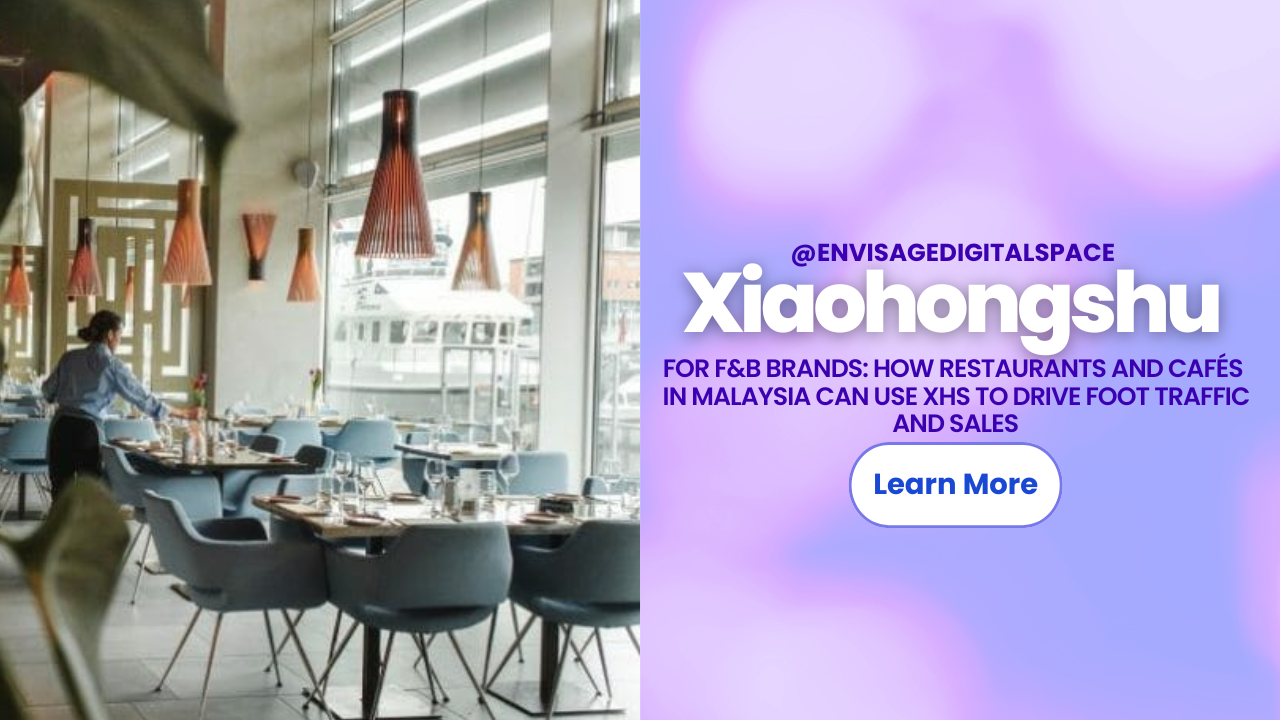
Space and ambience content — XHS users love beautiful dining environments. Showcase your café or restaurant interior, outdoor seating, table settings, and any distinctive design features. Content that communicates the experience of being in your space is powerful for driving decision-making among users planning where to go.
Behind-the-scenes content — XHS users are highly engaged by transparency and authenticity. Posts that show your kitchen, your preparation processes, your team, or the sourcing of your ingredients consistently generate strong engagement. This type of content humanises your brand and builds deep trust with your audience.
Seasonal and limited edition content — create urgency and exclusivity by posting about seasonal menus, limited time offerings, or special event menus with urgency-driven captions. FOMO (fear of missing out) is a powerful driver on XHS, particularly for F&B content.
User experience stories — post content that describes the overall experience of visiting your establishment — the ambience, the service, the food journey from start to finish. This narrative format performs well in search results for users searching for experience-driven recommendations.
XHS SEO for F&B: The Keywords That Drive Discovery
For F&B brands on Xiaohongshu, keyword strategy should be built around three core search behaviour categories:
Location-based searches — terms such as “café KL Sentral,” “brunch Bangsar,” “best noodles Cheras.” Include your specific location and nearby landmarks in every post.
Cuisine and category searches — terms that describe what you serve: “matcha latte,” “omakase KL,” “açaí bowl Malaysia,” “Korean BBQ KL.” Use the most specific relevant terms for your menu items.
Experience-driven searches — terms like “aesthetic café KL,” “Instagrammable restaurant Malaysia,” “date night restaurant KL,” or “solo café work spot.” Understanding how XHS users frame their search intent helps you create content that matches their language.
Incorporating all three categories into your content ensures you capture users at different stages of their decision-making journey — from early inspiration to active planning.
KOL and Food Blogger Strategy for F&B Brands on XHS
For F&B businesses, food KOL collaborations on Xiaohongshu can deliver extraordinary results. A well-executed post from a trusted food KOL can generate significant reach, save thousands, and translate directly into customer visits within days of publication.
When selecting food KOLs for your XHS campaigns:
Prioritise creators whose audience demographic matches your target customer — particularly age range, location, and dining preferences.
Look for KOLs whose content style aligns with your brand’s aesthetic. An upscale fine dining restaurant should partner with KOLs whose content reflects a similar level of sophistication.
Consider hosting KOL dining experiences at your establishment rather than simply sending products. For F&B, the in-person experience generates far richer, more authentic content than a product post alone.
Brief KOLs on your key messages but allow them to write in their own voice. XHS users immediately recognise and disengage from content that reads like a press release.
Encouraging User-Generated Content on XHS
One of the most cost-effective Xiaohongshu marketing strategies for F&B brands is actively cultivating user-generated content (UGC). When real customers post about their experience at your establishment on XHS, it creates a multiplying effect — each post extends your reach to a new audience and adds a layer of authentic social proof.
Strategies for encouraging UGC include creating visually distinctive spaces or menu items that guests naturally want to photograph and share, training your staff to mention XHS naturally to customers, creating subtle in-restaurant prompts (such as tastefully placed table cards or mirrors with good lighting), and running periodic XHS-specific campaigns or giveaways that incentivise customers to post about their visit.
Measuring Success for Your F&B XHS Strategy
For F&B brands, success metrics on XHS should go beyond platform vanity metrics. Track:
Search ranking for your primary location and category keywords, post save rates (high saves indicate users are planning a future visit), comment sentiment (are users expressing intent to visit?), foot traffic correlation with content spikes, and any redemption rates if you run XHS-specific offers or promotions.
How Envisage Digital Space Helps F&B Brands on XHS
At Envisage Digital Space, we have worked with F&B brands across Malaysia to build Xiaohongshu presences that drive real customer visits and measurable revenue growth. Our XHS marketing service for F&B brands includes account setup and optimisation, content strategy and creation, KOL identification and campaign management, SEO keyword research and implementation, and monthly performance reporting.
We understand the specific content behaviours and search patterns that drive F&B discovery on XHS in the Malaysian market, and we use this knowledge to build strategies that generate consistent, compounding growth for our clients.
Conclusion
Xiaohongshu is redefining how Malaysian consumers discover their next dining experience. For F&B brands willing to invest in a strategic, authentic, and SEO-optimised XHS presence, the platform represents one of the most cost-effective ways to reach high-intent customers at the exact moment they are deciding where to eat.
Whether you are a new café looking to build your first XHS following or an established restaurant brand ready to scale your presence on the platform, Envisage Digital Space is ready to help. Contact our team today to get started.